


Economic Perspective 6/26/2026
The Latest Trending Economic, Environmental and Infrastructure News Curated for You by The Balmoral Group
The Balmoral Group provides practical, professional and precise Economics, Data Analytics, and Engineering Consulting services and is part of a globally integrated team.
Happy Friday!
Next week will be the celebration of our country's 250th birthday on July 4th, and to kick-off an early celebration the United States Soccer Team has advanced into the next round at the World Cup. They will next play Bosnia and Herzegovina on July 1st.
As negotiations for an end to the Iran-US War the Strait of Hormuz is slowly opening up to some traffic leading to minor normalization of oil prices. As a result, US Gulf States have seen declines in asphalt prices, also helped by crude exports from Venezuela. Other areas of the nation have yet to see dramatic asphalt price declines, but price increases have slowed for now.
Articles this week cover cuts to the National Science Foundation, the world's first fusion reactor, AI usage for environmental permits, and more! Our data visualization covers the link between synthetic fertilizers and methane emissions.
Please feel free to forward this to anyone you think would be interested. If you’d like to view previous editions please click here, or to subscribe please click here!

Climate Resilient coral Reefs Larger than Expected
Coral reefs have been racked by climate change as coral bleaching continues to occur across the world, scientists have delved deeper in trying to figure out how resilient coral reefs are to these challenges. Despite the continued rising problems reefs face, scientists have found that significantly more coral reefs are climate-resilient, three times more than expected, and equating to 64,000 square miles of reefs. This new discovery brings hope to scientists who originally though coral reefs were beyond saving, and with less than 28% of these reefs being located in protect areas there could be new energy to get more of these reefs protected for the future. Coral reef environments are vital to the protection of marine biology as they are a necessary existence for about 25% of marine species. Read more here.
Lawmakers Battle with the National Science Foundation over Ocean Observation Network
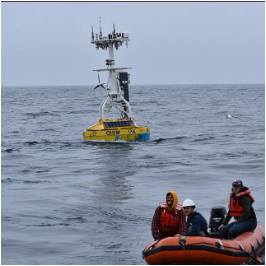
The National Science Foundation (NSF) received significant cuts in the White House’s proposed 2026 budget, leading to a reduction of 55% in the NSF’s budget. As a result, the NSF has pulled its Ocean Observation Network, recovering over 900 water instruments that were tracking marine heatwaves and flooding. The data helped monitor changes in the Atlantic Meridional Overturning Circulation and track global climate regulation. Without this constant flow of current circulation, regional temperatures would become more extreme. Critics have pushed back against this program being pulled, arguing that its absence will make the US further dependent on China for ocean data and climate science. Read more about this here and here.

World's First Fusion Reactor Gets the Go-Ahead in Washington State
In 2023, Microsoft entered into an agreement with Helion, a fusion energy company, to construct the world’s first nuclear fusion reactor, and provide up to 50 MW of power to Microsoft’s data center by 2028. In 2025, site work and construction began on the project, dubbed “Orion”. Now, another hurdle has been overcome; regulatory approvals from the Washington Department of Health have come in, allowing Helion to begin constructing the fusion generator itself. While fusion has still not had great success with producing more energy than it consumes, Helion have stated they are confident in their ability to meet Microsoft’s demand by 2028. Read more about the project here.

Double Damage: Warming Climate Reduces Milk Quality and Quantity
According to a study by a team of researchers at Cornell University, heat stress reduces both the quantity and quality of milk produced by dairy cows. Using data from 6.5 million cows across 43 states, the study found that warmer temperatures not only reduce milk production but also dilute the fat and protein content of milk. The study estimates that losses associated with reduced milk quality are roughly equal to those associated with reduced milk production, bringing the total annual cost of heat stress to the U.S. dairy industry to about $1.65 billion. Read more here.

AI Implemented to Issue Environmental Permits Faster
Recently, the federal Permitting Council has allocated $14 million in order for federal agencies to implement AI for more efficient permitting practices. The US Army Corps of Engineers received $7.1 million to have AI manage environmental reviews. Receiving $4.8 million, the US Coast Guard plans to develop a new AI-assisted digital bridge permit application program. Lastly, the National Telecommunications and Information Administration received $2.8 million to utilize AI to draft parts of environmental assessments and impact statements. While not entirely replacing employee review, there is still potential for litigation due to AI’s increased role in approvals or denials. The Permitting Council remains optimistic that such litigation will fail, and plans for more agencies to implement similar AI strategies in the future. Read more here.
USDOI Proposes Decreased Drilling Requirements
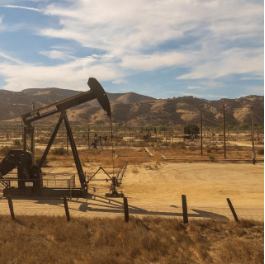
The USDOI recently proposed repealing bonding requirements for oil and gas drilling. Since 2024, in order to drill, oil firms would have to pay a $500,000 bond, but with the new planned regulations the requirement falls to $25,000. Additionally, the USDOI eliminated the need for oil companies to detail plans to limit methane emissions when applying to drill. With these shifts, there is an increased possibility of taxpayer dollars being used to clean orphaned wells. There are also potential environmental concerns associated with less allocated cleanup funding and less consideration of greenhouse gases as more cancerous chemicals may be emitted into the air. However, the rate decrease will likely lower barriers to entry within the fossil fuel industry, making way for more small firms. Read more here and here.
Data Visualization of the Week
The Link Between Synthetic Fertilizers and Methane Emissions in the US
Using historical FAO data from 1961 to 2023, this data visualization examines whether synthetic fertilizer use is linked to methane emissions from US beef cattle. The findings show that methane emissions generally increased alongside phosphate and potash fertilizer use, while nitrogen followed the opposite trend. Despite these patterns, the analysis found no evidence that total synthetic fertilizer use directly correlates with cattle methane emissions, showing the complexity of agricultural greenhouse gas emissions. Read more here.


Comments