


The Economic Perspective 6/5/2026
The Latest Trending Economic, Environmental and Infrastructure News Curated for You by The Balmoral Group
The Balmoral Group provides practical, professional and precise Economics, Data Analytics, and Engineering Consulting services and is part of a globally integrated team.
Happy Friday!
With the Iran war still ongoing, Western hemisphere countries have increased oil production to meet global demand. However, oil reserves in the US continue to decline. While prices have seen moderate declines, it is unclear if this trend will continue. Another passage of tariffs is expected as the White House searches for other legal routes to implement them
We have a variety of articles for you this week. We will take a look at optimal types of green spaces to help with cooling in cities, investment in wildlife crossings, shifts in career paths for Gen Z, and more. Our data visualization covers changing landscapes due to human activity across the US. Reach out to us if you have questions and read more on all of this below!
Please feel free to forward this to anyone you think would be interested. If you’d like to view previous editions please click here, or to subscribe please click here!

Green Spaces and the Potential for Cooling Cities
Urban heat has been a rising problem, but cities are planting more green spaces to assist with these rising temperatures. However, a recent study found that planting the right type of vegetation is important for reducing heat. While trees are a common option to use for reducing heat and creating shade other options like layered planting, the incorporation of shrubs along with trees, and other options can produce better results. Depending on the climate, location, and infrastructure trees alone cannot do the job and cities should explore other options for planting. More vegetation is not automatically better either as dense vegetation can often increase humidity counteracting their cooling effects. Read more here.

Four States Lead the Way in Wildlife Crossings
Colorado, Oregon, Utah, and Virginia are investing heavily in wildlife crossings to improve safety, reduce insurance claims, and protect the environment. Back in Fiscal Year 2024-2025 State Farm estimated there were 1.7 million auto insurance claims for wildlife collisions. As a result, several states have invested in wildlife crossings and protections for their wildlife corridors. The hope being that this will draw animals off the roads and to crossings where they will not be a danger to drivers. The four stateslisted above have leveraged hotel taxes, grants, voluntary fees, and special accounts to help fund these endeavors and can serve as a model for other states to do the same. Read more here.

Long-Lost Apple Accidentally Rediscovered in Washington
The stars aligned at Washington State University this past year, and a variety of apple once thought to be extinct reappeared seemingly out of the blue. Last fall, WSU horticultural student Tayettin Brodzinski by chance spied an apple tree on a walk that she guessed was a Golden Delicious but an upcoming assignment in one of her classes compelled her to take a leaf to be genetically tested. Brodzinski’s sample ended up being the only unidentifiable sample in her class, and after further investigation with the assistance of her professor, the apple was identified as a Walbridge apple: an heirloom apple originating from Illinois that became popular in the 1800’s, but which was eventually lost to time. Read more about the exciting rediscovery here!

Housing Market Effects of More Gen Z Entering Trades
Recent reports have found enrollment by Gen Z students in trade schools has sharply risen by 10.2%, while college enrollment rates have remained relatively the same. A key driver of this shift toward trades is the rising costs of student loan debt, with trades providing an alternative outlet for less debt and quicker savings. With these increased savings, the average age of first-time homebuyers may decrease, especially if more budget-friendly houses enter the market. Alongside people buying homes younger, the increased number of Gen Z worker in trades may also draw more first-time buyers to more attractive neighborhoods as opposed to simply the cheapest options. Read more here.
Florida Legislature Passes Property Tax Reform Bill
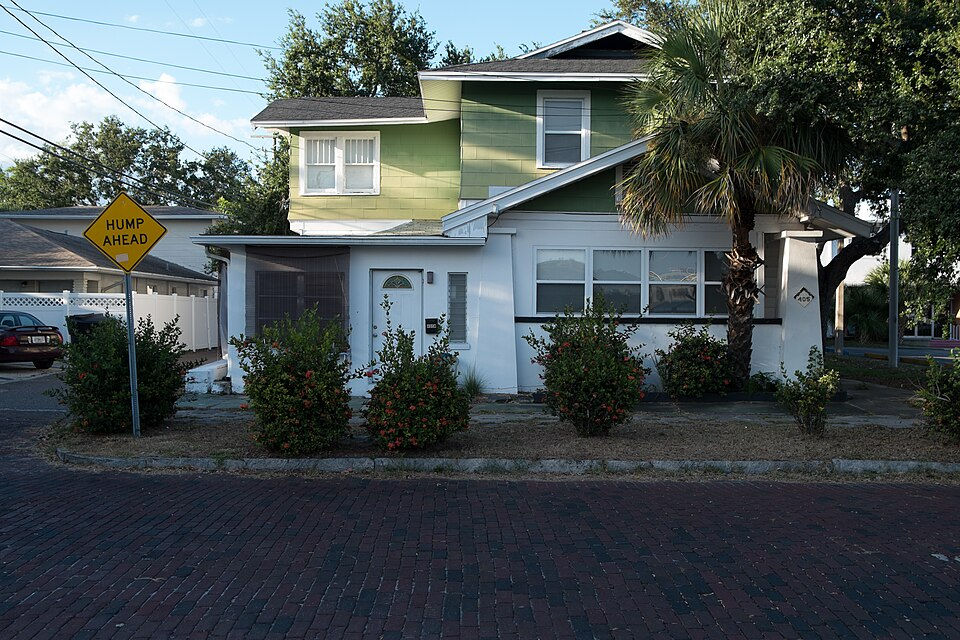
This week, the Florida Legislature passed a property tax bill during a special session called by Governor DeSantis. Bill HJR 1F would be the biggest property tax change in state history. The bill would raise the homestead exemption from $50,000 to $150,000 in 2027 and $250,000 in 2028. This would eliminate property taxes for 60% of Florida homestead owners. School board property taxes will be untouched with this bill though. Projected statewide losses in tax revenue would be $8.4 billion within two years. Grants would be provided to rural and smaller counties to maintain services. A constitutional amendment would be required to pass this meaning that 60% of voters will need to sign onto this for it to pass. Read more here.

Major Wins for Florida Agriculture in State Budget
The budget passed by the Florida Legislature for 2026/27 has significant funding for agriculture including several grant programs. The Florida Forest service received $132 million, the Rural and Family Lands Protection Program received $425 million, Farmers Feeding Florida received $38 million, and more funding went to FDACS, citrus, and others. These programs will protect land from development leaving it available for agricultural practices and other important industries. Further programs are getting investment to train students in agriculture, as the state hopes to expand the available workforce for the industry. Read more here and here.
Data Visualization of the Week
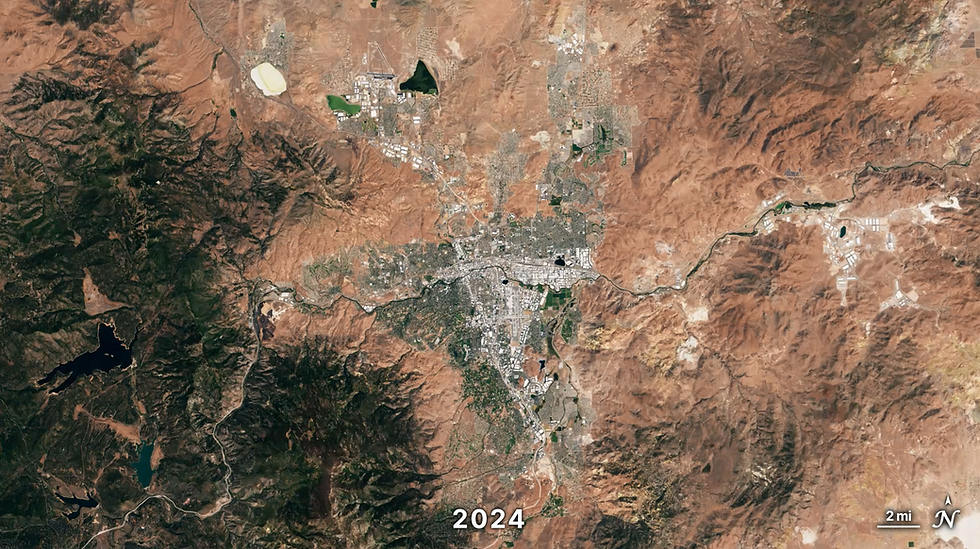
U.S. Landscape Time-Lapse
NASA has recently released a study that analyzed 35 years of changing landscapes using Landsat satellites. Despite the impact of any number of things such as wildfire, hurricanes, earthquakes, and other natural disasters, human development has dominated landscape changes the past 3 and a half decades. Data showed that between 1988 and 2022 18% of land was disturbed amounting to 700,000 square miles. Of this, 446,000 was disturbed by human activity. What this data presents is that current efforts to curtail disturbance to landscape and environments are not working. Human development continues to expand and threaten environments across the country and new strategies will be needed to protect what is left. Read more here.


Comments