


The Economic Perspective 12/05/2025
- Dec 5, 2025
- 5 min read
The Latest Trending Economic, Environmental and Infrastructure News Curated for You by The Balmoral Group
The Balmoral Group provides practical, professional and precise Economics, Data Analytics, and Engineering Consulting services and is part of a globally integrated team.
Happy Friday!
Welcome back readers, we hope you had a wonderful Thanksgiving break and are ready for another Economic Perspective! Earlier this week was Wildlife Conservation Day, an initiative raising awareness about the importance and value of protecting our wildlife and their natural habitats. In perfect timing, World Wildlife Fund posted their 2025 Conservation Highlights article, featuring successes including: 1.3 million acres of the world's last remaining grassland habitat being reserved, Nepal snow leopard numbers stabilizing, and a total of 2.4 million acres of continuing mangrove restoration. We hope you get the chance this weekend to get some fresh air and appreciate the local wildlife in your area, wherever you are!
TBG team members were busy this week closing the year out at different professional association events. Cortney Cortez attended the WTS Central Florida chapter's year-end member event, which was co-chaired by Andres Monsalve, celebrating and connecting with other professionals in the field!

Nate Willbur and Greg Seidel attended the American Society of Highway Engineers (ASHE) banquet and received Sherman Klaus' 2025 ASHE Central Florida Member of the Year recognition on his behalf, as he is currently traveling in Europe! He received this award for showcasing outstanding contributions in leadership, collaboration, and so much more for the transportation community. We sure are lucky to have him on the team! Way to go, Sherman!

In this edition of the Economic Perspective, we feature articles covering the repurposing of a historic ocean liner, good news for salmon recovery in Washington State, 3-D printed oyster reefs, and a changing landscape regarding the Clean Water Act. We also take a look at discourse surrounding the reintroduction of offshore drilling in several states, along with its implications. Our data visualization covers the surprising status of the hole in the Antarctic ozone layer, and what it means for the future.
Please feel free to forward this to anyone you think would be interested. If you’d like to view previous editions please click here, or to subscribe please click here!
Thanks for reading and have a great weekend!
Economic Analysts,
Maddie Drewry & Jillian Liebersbach

Ecology Completes Salmon Recovery and Habitat Restoration Project
Washington Department of Ecology (Ecology) recently completed another restoration project, this one focusing on Lower Peshastin Creek. As one of the only cold-water refuges in the Lower Wenatchee Basin, this creek is a critical site for Chinook Salmon, Steelhead (Trout), and Bull Trout. In total, Ecology removed 2,000 cubic yards of rock and contaminated soil, 2,000 pounds of lead and toxic waste, and planted three acres of new native vegetation in the area. The project also invested $300,000 into the community via local contractors, businesses, and sales tax. With this restoration project complete, salmon and people alike will continue to benefit from the area for years to come. Read more here. (Image source: Washington Department of Ecology, photo by Department of Fish and Wildlife)

3-D Printed Oyster Reef Has Implications Towards the Future of Restoration
A collaboration between the U.S. Army Corps of Engineers (USACE), Mobile District, and Mobile Bay National Estuary Program (MBNEP), funded through the Regional Sediment Management Program, has resulted in an artificial oyster reef which was 3-D printed using dredged materials on a farm in Dauphin Island, Alabama. The use of fine-grained dredged sediment provides multiple benefits, serving as both a low-cost, on-site construction material and as a way to further USACE’s mission to find uses for the material produced by the necessary action of clearing ports and harbors. Additionally, the reef is being monitored to see if it can serve as habitat for oysters and other aquatic life, with the potential for inclusion in future restoration projects to provide water filtration benefits. Read more here. (Image source: United States Army Corps of Engineers, photo by Keesha Robinson)

Ocean Linear Soon to be Home to the Largest Artificial Reef in the World
The SS United States, a 1,000-foot-long retired ocean liner, is set to be sunk and converted into an artificial reef 32 nautical miles southeast of Pensacola, Florida, sometime early in 2026. The massive project highlights a regional partnership between Pensacola officials and Coastal Conservation Association Florida in an effort to support tourism in the area while also furthering education opportunities and the conservation of marine life habitat. $1 million of Okaloosa County’s $10.1 million plan is set aside to construct an onshore museum where people can learn more about the ship’s history. This artificial reef will join 500 others that are already established in the County to foster habitat conservation, recreation, and heightened economic opportunities for the state to utilize. Read more here. (Image source: AP News, photo by Matt Rourke)
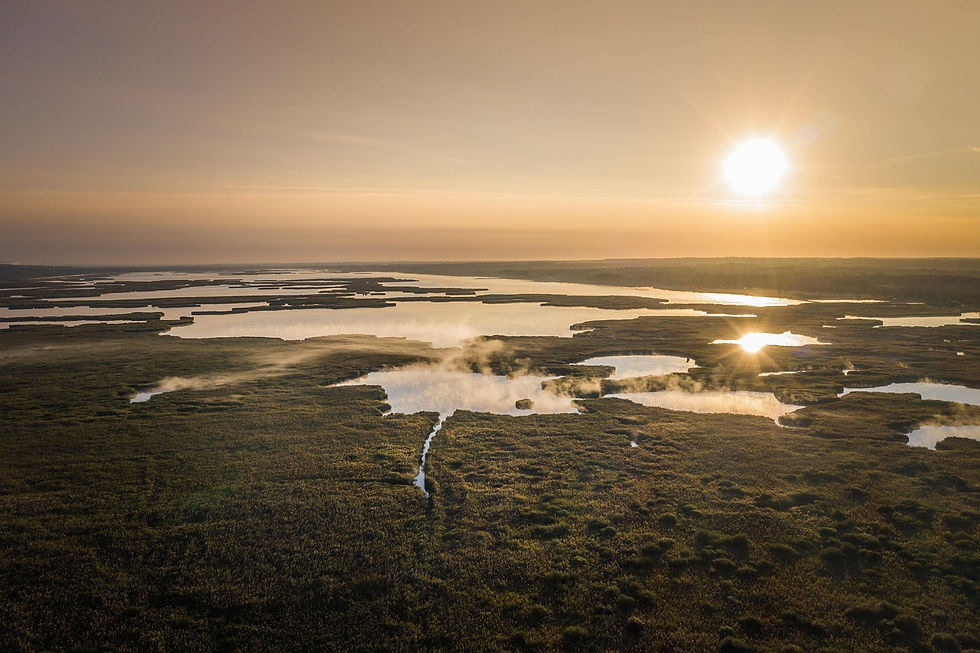
Wetland Protection to Decrease Under Clean Water Act Adjustments
The United States Environmental Protection Agency (EPA) announced a new rule, “Waters of the United States”, that will limit which waterways the Clean Water Act protects. Lee Zeldin, the EPA Administrator, says the rule is intended to address concerns from farmers worried about federal interference on their lands by reducing the water quality regulation ability of the federal government. While any lands that are removed from federal protection are still subject to state and tribal regulation, the proposed ruling poses threats to the water quality, habitat and wildlife conservation, and flood protection benefits provided by wetlands. Read more here.

Plan to Reintroduce Offshore Drilling in California, Florida, and Alaska Surfaces
The White House has proposed offshore drilling off the coasts of California, Alaska, and in Florida for the first time in years. The plan includes lease sales for oil drilling within federal waters between 2026 and 2031, with regions including the newly defined South-Central Gulf region shore near the Florida Panhandle. The situation has introduced much controversy, with the proposed goal being to advance domestic energy production and to act proactively for the oil industry based on a potential lag time until market impacts are seen. There have been bipartisan objections due to concerns of offshore drilling negatively impacting beaches and coastal waters, which serve as key components of the tourism industry. Additionally, the opposition points towards historic oil spills; the most notable of these the 2010 Deep Horizon Oil Spill near Florida, which has had long-term implications for the state's ecosystem and economic health. Read more here.
Data Visualization of the Week
Shrinking Hole in Antarctica Ozone Layer Hints at Recovery
Every year a gap appears in the Earth's ozone layer in the southern hemisphere due to human pollution, allowing UV rays through for a period of time. The ozone layer acts as a shield to protect life on earth from these UV rays that damage crops, cause skin cancer, and have other adverse health effects. In 2023, the hole measured 26 million square kilometers (sq km) and lasted until late December, but this year, the hole only reached 21 million sq km and closed nearly three weeks earlier. This promising observation is the second in a series of decreasing ozone holes in both size and duration, as 2024 also marked an improvement in contrast to the continuously worsening ones that were observed from 2020 to 2023. As efforts continue to phase out the use of ozone-depleting chemicals, scientists say this newest development is a reassuring sign moving forward. You can read more here. (Image source: The Guardian, CAMS/ECMWF)


Comments