


The Economic Perspective 1/23/2026
The Latest Trending Economic, Environmental and Infrastructure News Curated for You by The Balmoral Group
The Balmoral Group provides practical, professional and precise Economics, Data Analytics, and Engineering Consulting services and is part of a globally integrated team.
Happy Friday!
Welcome back to another edition of the Economic Perspective! Along with other FES/ACEC engineers, TBG's Greg Seidel and Jennifer Nunn participated in PE Legislative Days in Tallahassee this week. They discussed support of SB800/HB 839 for workforce development, wildlife corridor connectivity, investment in infrastructure, and protection of our natural resources. Special Thanks to Rep. Cross, Rep. Chamberlin, and Rep. Eskamani for taking the time to speak with our team!

Additionally, TBG Economist Cortney Cortez, and TBG Engineers Andres Monsalve and Anthonia Nwabudike, are attending the Annual Southwest Florida Water Resources Conference today in Ft. Myers, FL!
This week's edition features articles that highlight impacts of Venezuela action on asphalt, climate and pollution news, as well as a new Data Center monitoring bill in Florida. Our data visualization covers water stress levels in relation to data centers across the US.
Please feel free to forward this to anyone you think would be interested. If you’d like to view previous editions please click here, or to subscribe please click here!

US Refiners Could Absorb Venezuelan Oil
According to global energy and commodity market analyst Argus Media, the recent US intervention in Venezuela could expand crude oil, and therefore asphalt, production for US markets if sanctions are lifted. Chevron’s special waiver from US sanctions allowed the company to import about 120,000 barrels per day of crude oil from Venezuela to the US in December 2025. During the same month, increased production from neighboring Columbia pushed asphalt prices in the southern US to the lowest level in five years. Additional sources could further reduce asphalt-heavy project costs in the region. Read more here.

Uncertainty Surrounds the Future of Washington's Climate Pollution Fund
Washington state lawmakers are considering changes to the use of revenue from the Climate Pollution Reduction Fund, created under the 2021 Climate Commitment Act (CCA). The CCA established a cap-and-invest system that requires major emitters to purchase carbon allowances, with proceeds dedicated to climate, transportation, and environmental justice programs. Facing a projected budget shortfall, Governor Bob Ferguson has proposed redirecting a portion of future auction revenue to help maintain a sales-tax exemption for low-income households. Supporters argue the proposal addresses fiscal constraints and taxpayer impacts, while others raise concerns about reduced funding for climate and clean-energy investments. Legislative negotiations will determine how the fund is allocated moving forward. Read more here.

New Florida Bill Will Monitor Energy and Water Usage of AI Data Centers
A Florida Senate bill would create new requirements for large data centers to have water use permits and order the Florida Public Service Commission to create rate structures. The rate structures are intended to absorb the financial burden for additional water and energy consumption without passing it along to consumers. Read more here
.

Washington Coal Plant Shutdown Despite Conflicting State Directive
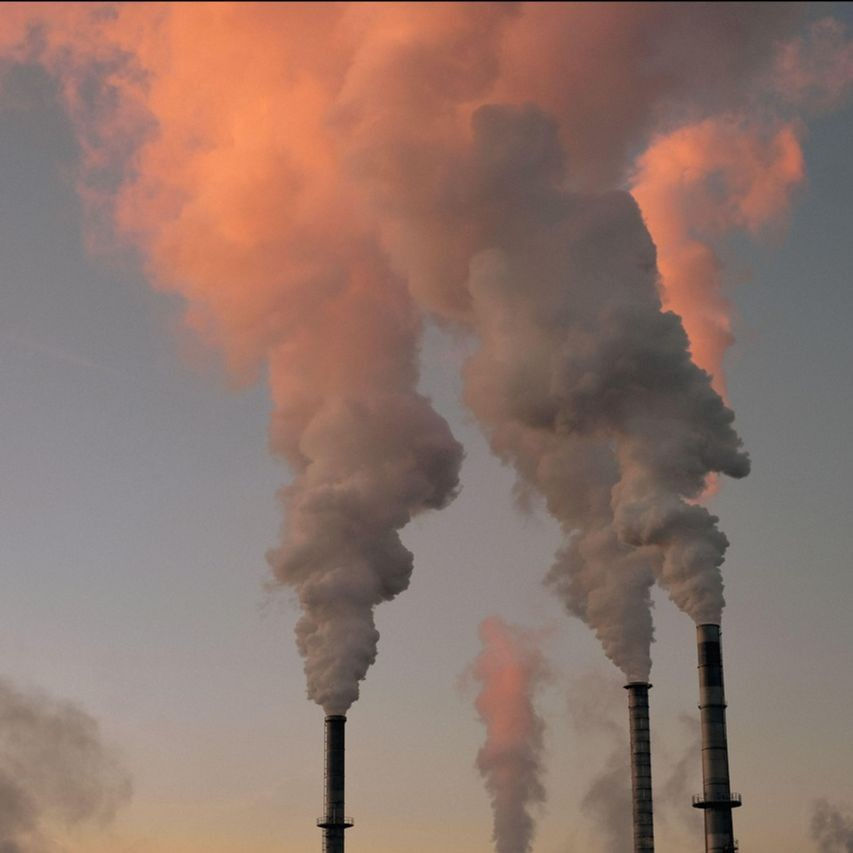
Washington’s largest source of climate pollution, the TransAlta coal-burning power plant in Centralia, Washington, shut down on December 19 and has remained offline despite a federal emergency order from U.S. Energy Secretary Chris Wright directing it to keep operating. Washington officials assert that state law mandated the plant’s closure by December 31 (2011 legislation) and that utilities cannot sell coal-based power after 2025 under a 2019 statute. Environmental groups have also filed a request to rescind the order, and the federal government has up to 30 days to respond before potential litigation. The plant is slated for conversion to natural gas under a separate agreement with Puget Sound Energy. Read more here. (Image source: KUOW, photo by Jeremy Long/WITF Photo).
EPA Will No Longer Quantify Benefits to Human Health
The U.S. Environmental Protection Agency (EPA) has ruled that the quantification of the cost of air pollutants will change, citing uncertainty in previous economic impact estimates. Fine particle and ozone impact on human health will no longer have an associated economic value, lessening the value correlated with health benefits derived from the regulation of air pollution. This move accompanies a slew of EPA decisions regarding economic impact analyses, such as their decision not to assess the benefits of electric versus gas vehicles and declining to calculate the benefits of reducing greenhouse gas emissions. The EPA is reportedly still considering health benefits, albeit without monetary representation. Read more here.

Specialty Crop Producers Pursue Aid Package
Specialty crops – fruits, vegetables, nuts, greenhouse crops, and ornamentals – are worth over $75B per year in the U.S., but farmers of specialty crops have been struggling mightily with economic losses. Input costs have risen much more than prices, and many farmers aren’t able to make ends meet. The Congressional Specialty Crop Caucus and American Farm Bureau Federation and others have been making their voices heard to request federal aid to help farmers continue to farm while they are dealing with record-high input costs. The latest House spending bill did not include aid for America’s specialty crop producers, and farmer advocates are hoping there is still time to change that. Read more here.
Data Visualization of the Week
Water Stress Levels Displayed in Relation to Data Centers
Due to heightened climate risks, the pressure for sufficient water supply has become a critical concern for many industries, particularly agriculture. Simultaneously, water-intensive sectors such as data centers are expanding rapidly, with 43% of existing centers already located in regions of high-water stress. The interactive data visualization illustrates this challenge through a map of the US, where darker color gradients indicate water stress index values exceeding 80, while lighter areas represent values of 20 or lower. Yellow squares mark data center locations. In Florida, the east cost displays higher water stress levels, coinciding with higher concentration of data centers along the coastline. View the visualization here (Image source: 2025 S&P Global).


Comments